
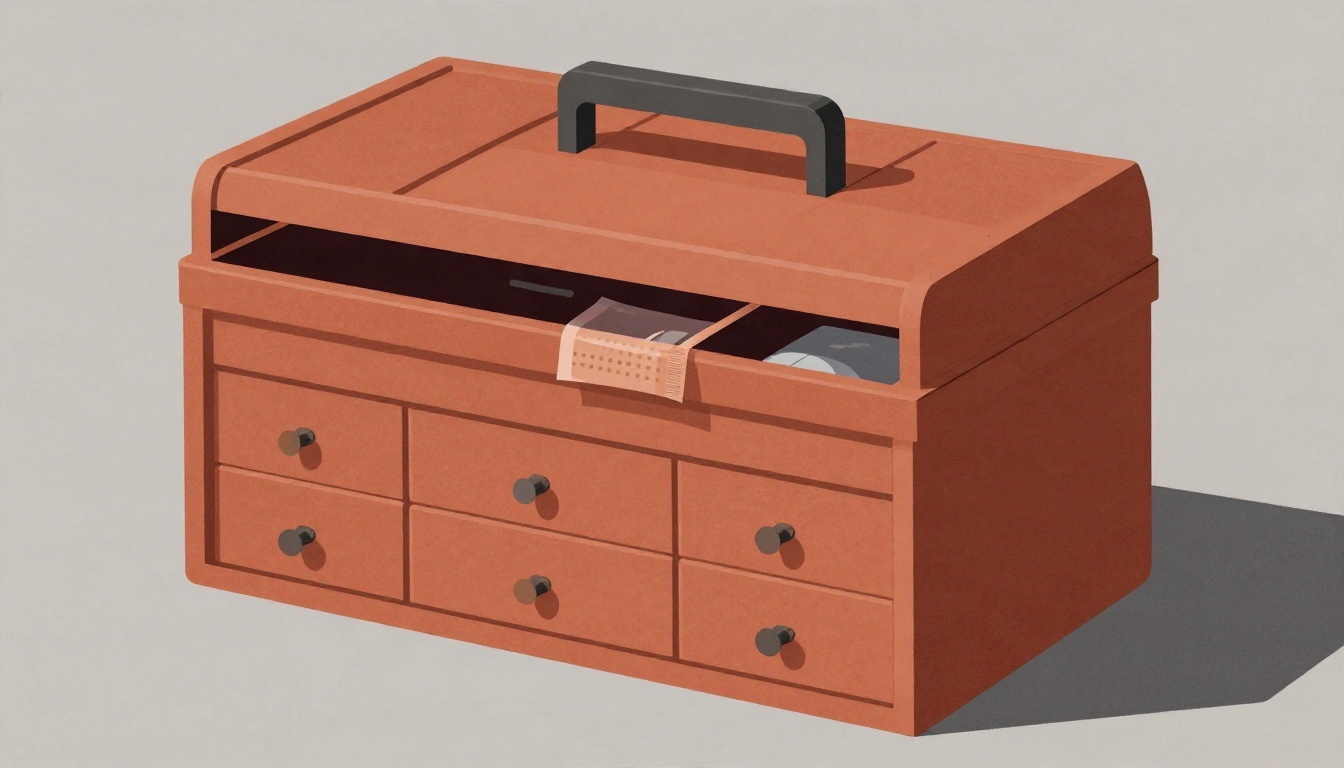
Rust is not caused by bad luck. It forms when oxygen and water or moisture react with exposed iron and its alloys, and it can appear on tools even when they sit inside a closed toolbox in a garage. If you are moving tools into a shed, garage, or self-storage unit, the goal is to break that reaction before it starts: keep the metal dry, keep the air around it dry, and put a barrier between steel and moisture.
At what relative humidity level do desiccants help prevent tool rust in enclosed storage?
Select one answer.
Why tools rust even in a closed box
A closed toolbox is not a dry box. Warm air holds more water vapor than cool air, and when the temperature drops, that vapor condenses on cold metal surfaces and starts turning iron into iron oxide. That is why tools stored in an enclosed space can rust even when they never get rained on. The practical target is to keep relative humidity in the enclosed storage space below 40%, the level at which desiccants are used to prevent tool rust.
Step 1: Clean and dry before anything else
Rust prevention starts before storage. Wipe off sweat, fingerprints, sawdust, and grime, because residue holds moisture against the steel. Dry every tool completely, including hinges, sockets, and the inside of tool rolls. A rag with a light oil or a water-displacing spray both cleans grime and leaves a thin protective layer on the metal.
Step 2: Apply a barrier coating
A barrier keeps moisture from reaching bare steel. Common options include paste wax, which is often warmed and wiped over steel parts, and light oils or rust-inhibiting sprays wiped on with a rag. For cast iron tables and steel tools in humid shops, a rust inhibitor wiped on with a paper towel is a common approach. Reapply after heavy use, and never store a tool wet.
Step 3: Control humidity inside the container
Desiccants absorb moisture and hold relative humidity down in an enclosed space. Silica gel packets are the familiar option, and rechargeable silica gel canisters are sold for cabinets and safes. Desiccants work in sealed spaces, not open rooms; for an open garage or shed you need a plug-in dehumidifier instead. If you use desiccant packs, check them periodically and recharge or replace them when saturated.
Vapor corrosion inhibitors (VCI) are another option. VCI emitters release corrosion-inhibiting vapor that fills an enclosed toolbox and forms a molecular layer on metal surfaces, interrupting the corrosion reaction. They are dosed by enclosure size, and some products combine VCI with desiccant for dual protection.
Step 4: Store tools in the right container
- Keep tools in a toolbox or cabinet rather than loose on a shelf.
- Use sealed plastic boxes or zip bags with desiccant for tools you rarely use.
- Replace old perforated drawer liners that trap surface moisture with smooth foam liners.
- Keep the container off a damp floor and away from walls that sweat.
- Avoid storing tools directly on concrete, which wicks moisture.
Step 5: Choose the right storage environment
Where you store tools matters as much as how you pack them. A garage or basement with seasonal temperature swings invites condensation. If you are storing tools long-term in a rental unit, a climate-controlled unit limits the humidity swings that drive condensation on cold metal. Drive-up access makes it easier to load heavy equipment without exposing it to rain.
A quick pre-storage checklist
- Clean and fully dry every tool.
- Wipe steel surfaces with a light oil, wax, or rust inhibitor.
- Place desiccant or a VCI emitter inside each sealed container.
- Use sealed boxes or bags for rarely used tools.
- Keep containers off the floor and out of direct damp.
- Inspect and recharge desiccants on a schedule.
- Treat early rust immediately before it pits the metal.
How the Featured Expert Can Help
Storaway LLC provides self-storage units in Caryville and Rocky Top, Tennessee, with both drive-up and climate-controlled options for personal and business items. The climate-controlled units help limit the humidity swings that cause condensation on stored tools and equipment, and online booking and flexible rental terms make it simple to reserve a unit. Learn more at Storaway LLC.
Test your knowledge
Rust needs moisture and oxygen to form on steel, and enclosed spaces can still trap humid air. The quiz below checks one key number from this guide.
{"question":"At what relative humidity level do desiccants help prevent tool rust in enclosed storage?","options":["Below 40%","Below 80%","Above 60%"],"correctIndex":0}