
According to storage guidance, which items benefit most from climate-controlled storage?
Select one answer.
Why inventory damage happens in storage
Most inventory damage in a storage unit isn't caused by a single disaster. It comes from slow, predictable problems: moisture wicking up through a concrete floor, cardboard boxes absorbing humidity, stacked items crushing the boxes below them, and stock that's packed so tightly you can't inspect it. The fix is a system, not a single product.
Start by sorting your inventory by how vulnerable it is. Electronics, cosmetics, candles, adhesives, and paper records are the items that benefit most from climate control, because heat and humidity swings degrade them fastest. Durable goods can tolerate more variation, but they still need to stay off the floor and out of standing water.
Step 1: Match the unit to the inventory
Before you rent, decide what you're actually storing. If you have frequent restocks, a drive-up unit saves real time because you can pull a vehicle right to the door. If your stock is temperature- or humidity-sensitive, a climate-controlled unit is the better fit.
Ask the facility directly about ventilation and how they manage moisture buildup, and look for a clean, well-maintained property with solid, sealed units. A facility that keeps up with maintenance is less likely to have the roof leaks and drainage problems that cause water intrusion.
Step 2: Get everything off the floor
This is the single highest-value habit. Water can pool on a storage floor from storms, poor drainage, or a broken water line, and even a small amount can cause significant damage. Pallets are the standard solution: place pallets on the floor, cover them with plastic tarps, then stack your items on top.
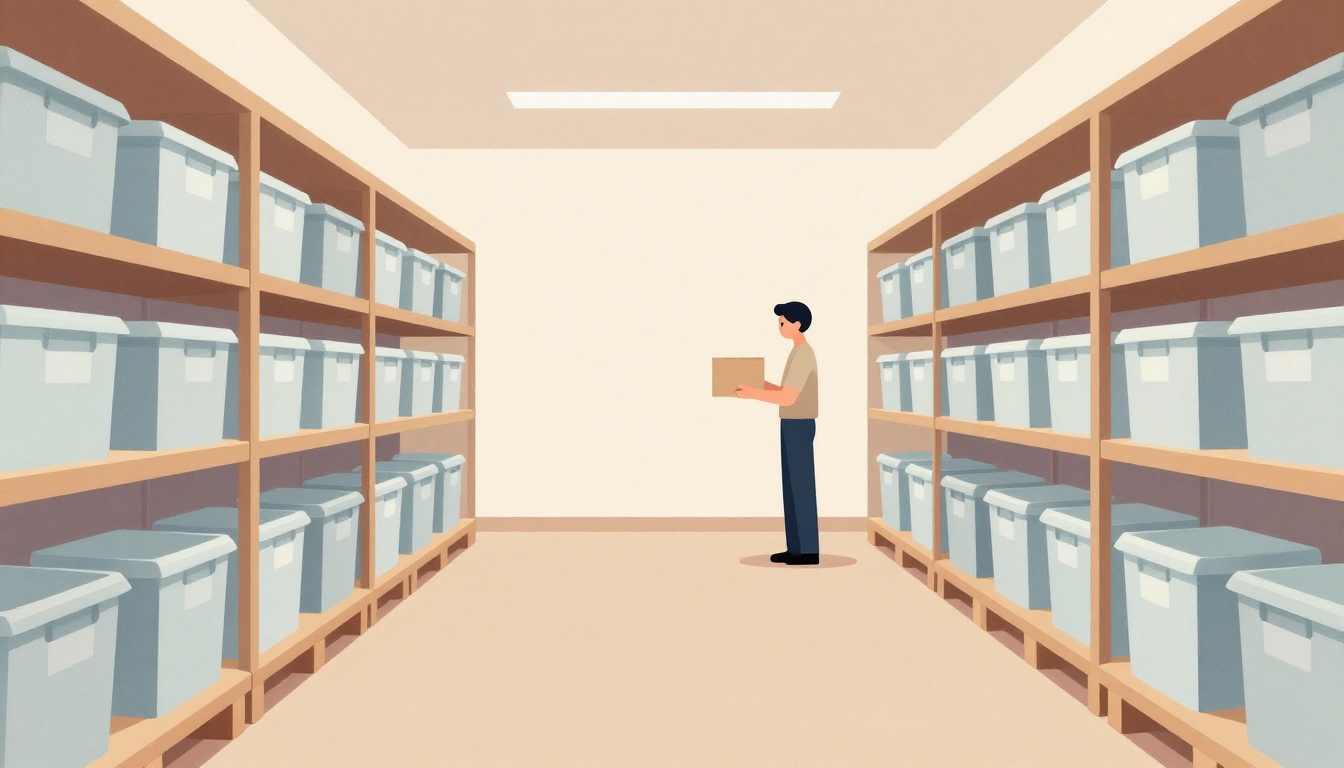
If you're storing smaller items, shelving works just as well and keeps boxes above the floor. Put heavier items on lower shelves and lighter, more fragile stock higher up. Keep boxed inventory off the floor whenever possible.
Step 3: Pack for moisture, not just for space
Cardboard absorbs moisture and loses structural strength, so switch to plastic bins with tight lids for anything vulnerable. For soft goods, vacuum-sealed bags keep moisture out and reduce volume.
Never store anything damp. Clean and dry items thoroughly before they go in, because residual moisture trapped in a sealed unit contributes to humidity and mold. Add silica gel packets or desiccant packs inside bins and boxes, and consider a moisture absorber or portable dehumidifier for longer-term storage of higher-value stock.
Step 4: Build a layout you can actually work in
Plan the unit before you load it. Sort items into three groups: things you use every week, things you use occasionally, and things you're holding for a future season. Put the weekly-use items near the front where they load quickly, and push seasonal or long-term stock toward the back.
Leave a walkway down the middle or along one side. It feels like wasted space, but it's what lets you check stock, pull a box, or restock between appointments without unloading half the unit. Label each box clearly on the front and side so you can identify contents even when boxes are stacked.
Step 5: Protect tools and equipment separately
If your business stores tools or equipment alongside inventory, treat them differently. Clean tools and equipment before putting them away, since dirt, grass clippings, and leftover chemicals cause problems over time. Drain fuel-powered equipment according to the manufacturer's guidance, and never store flammable, hazardous, or prohibited materials in a storage unit.
For valuable tools, use locking toolboxes and keep serial numbers, photos, and receipts in your business records. Cover larger equipment to protect it from dust, but avoid wrapping it so tightly that moisture gets trapped underneath.
A quick pre-move checklist
- Sort inventory by sensitivity: climate-controlled vs. durable
- Choose drive-up access if you restock often
- Confirm the facility's ventilation and moisture practices
- Buy pallets, plastic bins, and desiccant packs before moving day
- Dry and clean every item before it's packed
- Place heavy items low, fragile items high
- Leave a center walkway and label boxes on two sides
- Keep a running inventory list on your phone or clipboard
How the Featured Expert Can Help
Storaway LLC provides self-storage units in Caryville and Rocky Top, Tennessee, with both drive-up and climate-controlled options for personal and business items. The site emphasizes convenient online booking, flexible rental terms, and customer-focused service. If you're storing business inventory in East Tennessee, you can review unit options and book online at storawayllc.com.
If you're weighing whether climate control is worth it for your specific stock, that's the question to bring to the facility before you sign.