
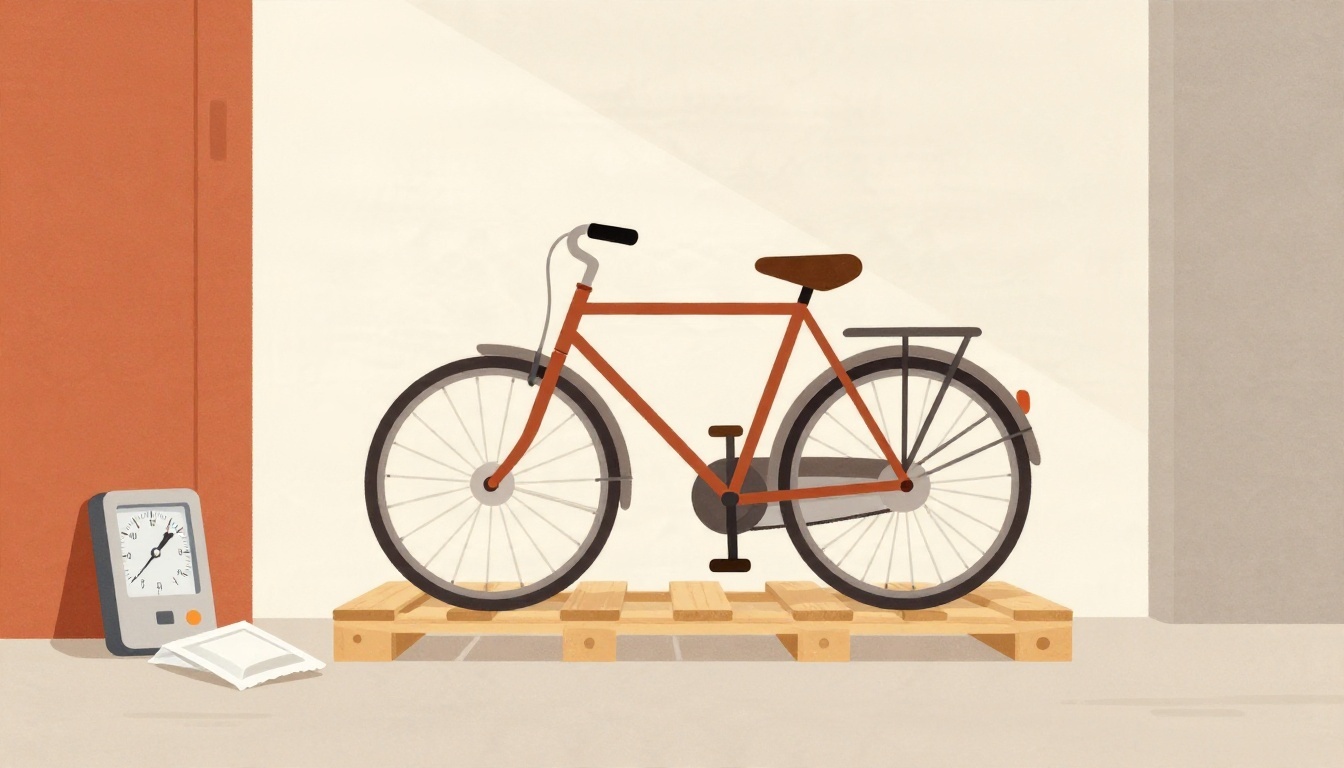
Rust rarely appears because you stored a bike badly. It appears because moisture stayed in contact with bare metal long enough to oxidize it. Chains, cassettes, bolts, derailleurs, cable ends, and steel frames are the usual victims, and the damage often happens quietly over a winter or a humid summer. The good news is that rust prevention is a short, repeatable routine: dry the gear, protect the metal, and control the humidity around it.
What relative humidity level typically preserves most stored materials?
Select one answer.
Why stored bikes rust so easily
Most bike drivetrain parts are not stainless steel, so cogs and chains will rust given the right conditions. Cold, damp sheds and garages create exactly those conditions, which is why corrosion sets in during storage even when the bike is not being ridden. Humidity is the underlying driver: when relative humidity runs high, metal parts are at risk of rust and corrosion, and an environment below 50% relative humidity typically preserves most materials.
That gives you a target. If you can keep the air around your gear reasonably dry and keep a protective film on bare metal, rust has very little to work with.
Step 1: Clean and dry before anything goes into storage
Never store a bike or gear that is wet, muddy, or salty. Dirt and residue hold moisture against metal.
- Wash with mild soap and water, and avoid high-pressure washers that push water into bearings and crevices.
- Dry the frame, chain, spokes, and bolts with a clean cloth, paying attention to crevices and cable housings.
- Let everything air-dry completely before it goes into the unit. A bike that feels dry on the frame can still hold water in the chain and cassette.
Step 2: Coat the metal that rusts
The principle is simple: get a thin film of something waxy or greasy over bare metal so moisture cannot reach it. A multi-use spray applied to the drivetrain and exposed bolts creates a thin but durable protective layer that helps keep moisture at bay.
- Chain and drivetrain: clean, dry, then lubricate. Use wet lube in wet conditions and dry lube in dry conditions, and wipe off excess so grit does not stick.
- Bolts, derailleurs, and cable ends: apply light oil or anti-corrosion spray to these small but vulnerable components.
- Brakes: keep lubricants away from brake rotors and pads.
- Steel frames: consider an internal frame protectant sprayed inside the tubes to slow corrosion from the inside out.
Silicone spray works as a general rust inhibitor when sprayed on and wiped down, and products like Boeshield T-9 dry to a waxy film that can last weeks or months. Use sprays sparingly, since they can attract dust.
Step 3: Control humidity where the gear sits
This is the step most people skip, and it is the one that decides whether your coating work holds up.
- Measure it. Put a digital hygrometer in the storage space and check it regularly. Indoor humidity should not exceed 50%.
- Use absorbers. Silica gel packs, commercial moisture absorbers, or charcoal bags help reduce excess humidity and odors in enclosed spaces.
- Elevate everything. Concrete floors release moisture, so keep bikes and gear on pallets, shelves, or boards rather than directly on the slab.
- Leave airflow gaps. Do not pack items tight against walls; a little breathing room prevents moisture buildup.
- Skip the plastic wrap. Tight plastic traps moisture. Use breathable covers instead.
- Inspect for leaks. Check the unit for cracks and holes before you load it, and recheck periodically.
If you are storing in a humid climate, a climate-controlled unit removes most of this fight. Climate-controlled storage continues to draw more business precisely because clients trust environments that protect what they store.
A practical pre-storage checklist
- Wash and fully dry the bike and all gear.
- Clean and lubricate the chain; apply anti-corrosion spray to bolts, derailleurs, and cable ends.
- Keep all lubricants off brake surfaces.
- Confirm the storage space is leak-free and dry.
- Place a hygrometer inside and confirm humidity stays at or below 50%.
- Elevate items off the floor and leave gaps for airflow.
- Add moisture absorbers and check them on a schedule.
- Inspect metal parts for early rust every few months and re-coat as needed.
Quick answers
Can I store a bike under a tarp outdoors? A waterproof cover helps, but wind and condensation still work against you. If outdoor storage is unavoidable, coat all metal except brakes and rotors with a protective spray and reapply regularly.
Does a climate-controlled unit prevent rust entirely? No product guarantees that, but keeping relative humidity below 50% removes the main condition rust needs.
How often should I check stored gear? Check humidity and metal parts every few months, and after any season with big temperature swings.
How the Featured Expert Can Help
Storaway LLC provides self-storage units in Caryville and Rocky Top, Tennessee, with both drive-up and climate-controlled options for personal and business items. The site emphasizes convenient online booking, flexible rental terms, and customer-focused service. If humidity is your main concern, a climate-controlled unit is the practical starting point. You can review options and book online at storawayllc.com.