
According to storage-packing guidance, what relative humidity range should you aim for to keep mold risk low?
Select one answer.
Start with a plan, not a pile of boxes
Most storage-unit damage isn't caused by the unit itself. It's caused by how things were packed before the door rolled down. Professionals solve this by working in a fixed order: clean and dry everything, choose the right containers, build a stable base, and leave a walkable aisle. Skipping any of those steps is what leads to crushed boxes, warped furniture, and that musty smell you notice three months later.
Here's the sequence to follow.
Step 1: Clean and dry before anything goes in
Dust, crumbs, and residual moisture are what feed mold and attract pests. Wipe down furniture, wash and fully dry textiles, and let appliances air out completely. Store Space's long-term storage guidance puts it plainly: clean before packing, and use containers that control airflow and restrict light, because dust, pests, temperature swings, and humidity are the main threats to stored goods (Store Space).
If an item is damp when it goes in, it stays damp. That's the whole problem.
Step 2: Choose containers that match the job
Cardboard is cheap and stacks well, but it absorbs moisture. Plastic bins with gasketed or rubber-sealed lids resist humidity far better, which matters in a climate like East Tennessee's. For anything you'd hate to lose to mildew — photos, documents, electronics, leather — sealed bins are the safer call.
A few rules that hold up across every guide:
- Use uniform box sizes where you can. Same-size boxes stack predictably and waste less vertical space.
- Avoid plastic bags and shrink wrap on textiles. They trap moisture against fabric. Breathable covers are better for mattresses and upholstery.
- Wrap fragile items — dishes, artwork, décor — in bubble wrap or foam sleeves, then pack them snugly in sturdy boxes so nothing shifts.
- Remove batteries from electronics and store cables separately, labeled.
Step 3: Build the unit from the back forward
Professional movers load a unit in layers, not randomly.
- Place heavy, sturdy items first along the back and side walls. These form the structural base.
- Stand bulky furniture on end where possible. Couches, dressers, and bed frames use far less floor space vertically.
- Stack lighter boxes on top of heavy ones — never the reverse, or the bottom boxes crush.
- Leave a clear aisle down the center. You should be able to walk to the back of the unit without climbing over anything.
- Face labels toward the aisle so you can read them without moving boxes.
Public Storage's packing walkthrough recommends exactly this: label every box, disassemble furniture to reduce its footprint, keep a center aisle open, and use heavy items to create a stable base (Public Storage).
Step 4: Use the dead space
Empty volume is wasted money. Fill the inside of dressers, wardrobes, ovens, fridges, and washing machines with smaller boxed items. Bring metal shelving if your unit allows it — shelving lets you stack safely and use the full height of the unit instead of piling boxes until the bottom ones buckle.
Step 5: Control moisture, even in climate-controlled units
Climate control keeps temperature and humidity steadier, but it isn't a force field. Two habits make a real difference:
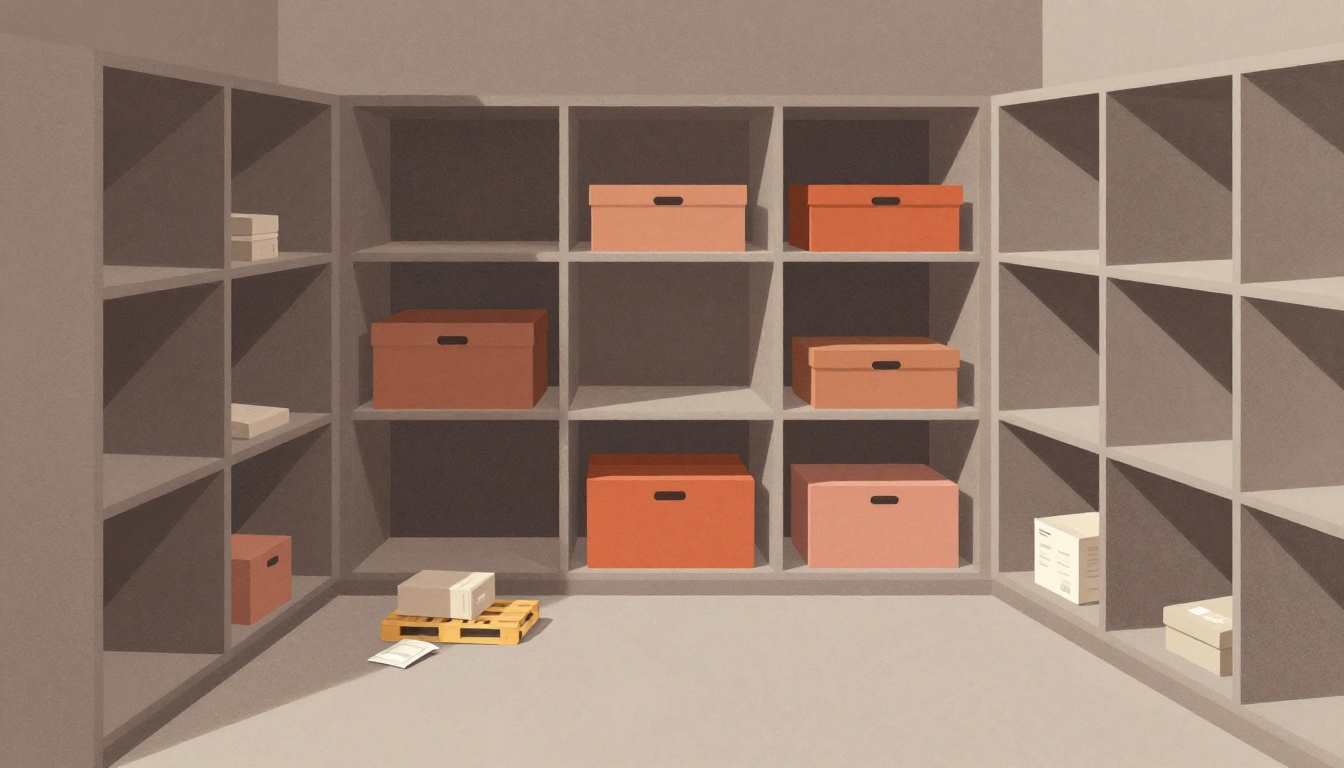
- Elevate everything off the concrete. Use pallets, shelves, or a layer of cardboard. Concrete floors transfer moisture and cold, and airflow underneath helps.
- Add desiccants. Silica gel packets, moisture absorbers, or charcoal dehumidifiers tucked inside boxes and bins reduce trapped humidity (Towne Storage).
Aim for relative humidity in the 30–50% range. Mold risk climbs sharply once humidity passes 50–60%, which is why climate-controlled units are the biggest single upgrade for sensitive items (Howard Environmental).
Step 6: Label, inventory, and check in
Keep a written or digital list of what's in each box and roughly where it sits in the unit. Label boxes with contents and mark fragile ones clearly. Then visit once a month — a quick visual scan for warping, mildew, or odd smells catches problems while they're still cheap to fix.
Quick packing checklist
- Everything cleaned and fully dry
- Sealed plastic bins for moisture-sensitive items
- Fragile items wrapped and boxed snugly
- Batteries removed from electronics
- Heavy items on the floor, light boxes on top
- Furniture stood on end where possible
- Center aisle clear, labels facing out
- Items elevated off concrete
- Desiccant packets added
- Inventory list kept and unit checked monthly
How the Featured Expert Can Help
Storaway LLC provides self-storage units in Caryville and Rocky Top, Tennessee, with both drive-up and climate-controlled options for personal and business items. The site emphasizes convenient online booking, flexible rental terms, and customer-focused service. If you're storing in East Tennessee and want a unit that matches the packing approach above, you can review options and book at storawayllc.com.
Test your knowledge
Before you rent, make sure you've got the basics straight. The single most important habit for protecting stored belongings from humidity is elevating them off the floor and adding moisture control — not just relying on the label "climate controlled."