
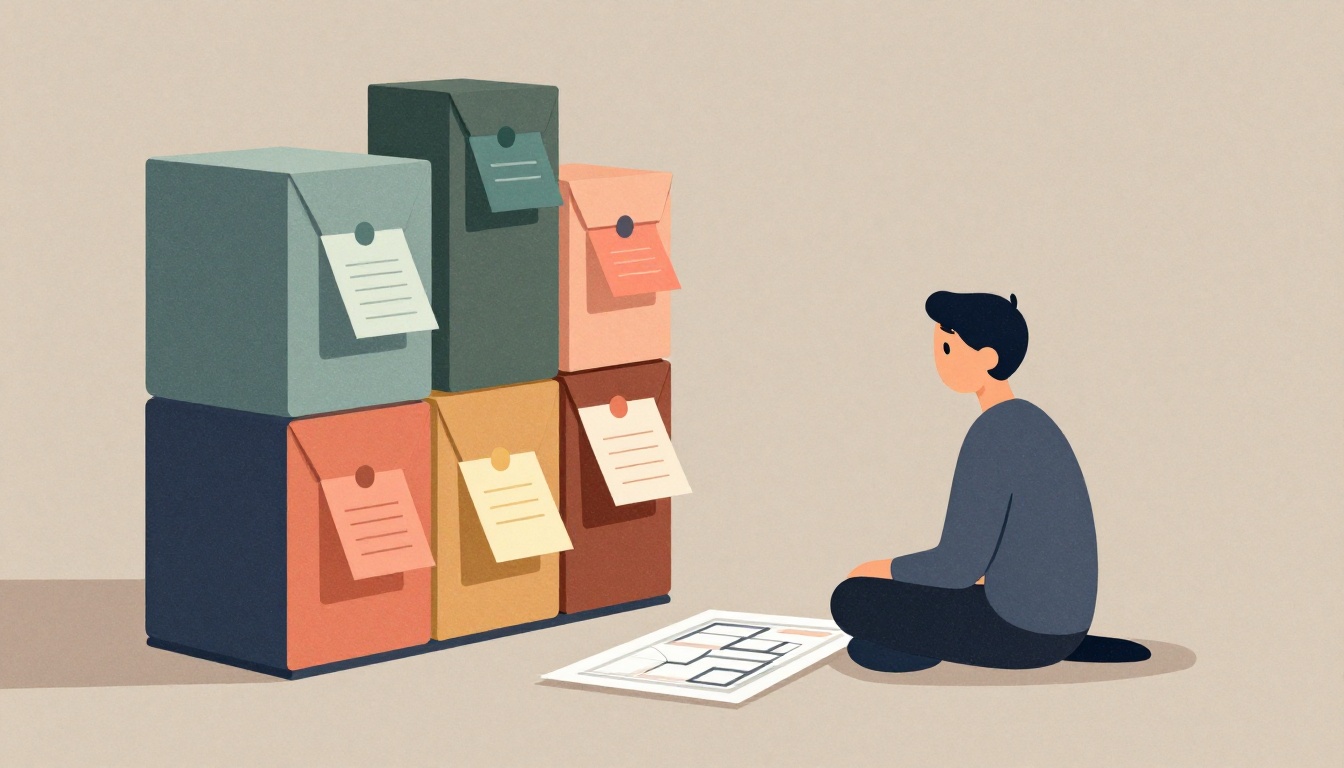
You packed the unit months ago and now you're standing in front of a wall of identical boxes, trying to remember which one holds the winter coats. Without a written record, every visit turns into a search party — and you risk buying replacements for things you already own.
A storage inventory fixes that. It's a simple list of what's in your unit, where it sits, and what it's worth. It takes 20–30 minutes to set up and pays that time back on every visit. Here's how to build one you'll actually maintain.
According to storage organization guidance, roughly how long does it take to set up a proper storage inventory list?
Select one answer.
Why a storage inventory is worth the effort
Three benefits go beyond basic tidiness:
- It prevents duplicate purchases. People regularly buy tools, bedding, or holiday decor they already own but can't locate.
- It makes insurance claims payable. If your unit is damaged by fire, flooding, or a covered theft event, your payout depends on what you can document. A list with descriptions, estimated values, and photos turns a vague claim into a specific, supported one.
- It speeds up move-out. Knowing exactly what's there — and where — cuts retrieval and clearing time significantly.
Step 1: Choose a format you'll actually maintain
There's no wrong method, only abandoned ones. Pick the lowest-friction option for you:
- Spreadsheet (Excel or Google Sheets): highly customizable, with fields for box ID, description, quantity, condition, estimated value, and location.
- Inventory app: options like Sortly let you scan barcodes, attach photos, and organize categories visually.
- Notebook or printed sheet: reliable, needs no wifi, works fine for small units.
A spreadsheet or a storage inventory app is the most common recommendation for documenting contents, including item descriptions, quantities, and box numbers. Choose one and commit.
Step 2: Start before you pack
The inventory process should begin before a single item goes into a box, while everything is still visible. Group items by category first — kitchenware, seasonal decorations, sports equipment, clothing, electronics, important documents, business inventory, collectibles — then document as you pack.
Step 3: Label every box before it goes in
Labels are the backbone of the system. Use durable, color-coded labels and assign a color per category. Label containers on multiple sides so they're readable no matter how they're stacked. Avoid vague descriptions like "misc." — write specific contents so you can identify a box at a glance.
Step 4: Create zones and a floor plan
An organized unit saves time and reduces errors. Place frequently accessed items near the entrance, stack vertically with shelving and bins, and leave a clear walkway through the unit. Put heavier boxes and equipment on the floor or lower shelving, and keep fast-moving items at eye level.
Step 5: Record condition and value
For anything valuable, note the condition and an estimated value, and photograph it. This is the documentation that supports an insurance claim later. For collectibles or high-value items, apps like Nest Egg allow up to 10 images per item plus serial numbers and warranty details.
Step 6: Audit on a schedule
Conduct periodic audits to reconcile your physical inventory against your list. Twice a year is enough for most households. During each audit, remove items that no longer support your current needs and update locations for anything you moved.
Quick-start checklist
- Pick your format (spreadsheet, app, or notebook)
- Sort items into categories before packing
- Assign a color per category
- Label every box on at least two sides
- Number each box and log it in your list
- Sketch a simple floor plan with zones
- Photograph high-value items and note values
- Schedule two audits per year
Climate control matters for what you're tracking
If you're storing electronics, documents, wood furniture, or textiles in a humid climate, climate-controlled storage protects them from the moisture swings that cause warping, mold, and corrosion. Match your unit type to your inventory — it's cheaper than replacing damaged goods.
How the Featured Expert Can Help
Storaway LLC provides self-storage units in Caryville and Rocky Top, Tennessee, with both drive-up and climate-controlled options for personal and business items. The site emphasizes convenient online booking, flexible rental terms, and customer-focused service. If you're building an inventory system and need a unit that fits it, you can book online at Storaway.
Think you've got the basics? Test yourself before you start labeling.